5 Key Reasons to Start an LLC for your Small Business

Starting a small business is a complicated and difficult endeavor. One big decision you face as a new entrepreneur is whether to form a business entity, or simply launch the business in your own name.

In this blog post, we will discuss five key advantages of forming a business entity before you start printing those business cards.

1) Limited Liability Protection

The primary advantage of a legal business entity for any small business owner is the shield it offers for personal assets. When operating in your own name, or as a “sole proprietorship,” you are the one responsible for all claims against “the business”. That means individuals that have a claim against your business have a claim against your personal bank account, and even your home.

When operating properly through a business, such as a limited liability company (LLC), your personal assets are totally off of the table in the event of claims. That means, if someone trips and falls on your property, or if your business owes a debt, the only thing the lawyers can go after are the assets within the business’s ownership.

2) Facilitating Future Growth and Collaborations

Entrepreneurs often harbor aspirations for business expansion or collaborations. A legal entity provides the necessary framework for such endeavors. By establishing an LLC or corporation, businesses lay a structured foundation that simplifies the addition of co-owners, investors, or potential partners.

Just as you can buy stock in Walmart and become a partial owner on the New York Stock Exchange, starting a small business allows you sell stock or ownership interests to future partners. This is important as your business grows, especially if you need to raise capital to expand new developments.

3) Presenting a Professional Image

In any industry, professionalism significantly influences customers’ decisions. Establishing a legal entity, such as an LLC or corporation, allows businesses to project themselves as distinct and credible entities. This professional branding distinguishes businesses from competitors and fosters trust among potential clients. A well-structured business entity enhances customer trust, instilling confidence in the reliability and credibility of the services offered.

4) Compliance with State Regulations

Florida and many other states require individuals who want to use a trade name, such as “Eddie’s Electrical,” to either form a business or register a doing business as name (DBA). Forming a business, such as “Eddie Electrical, LLC,” allows business owners to take advantage of lawfully using a trade name.

The consequences of failing to comply with this law can be significant. For example, a business that fails to incorporate or register its name may be unable to use the court system to enforce a contract until it complies with the statute.

5) Access to Financial Services and Collaborations

Collaborations with vendors and access to specialized financial services often necessitate a legal business entity. Forming an LLC or corporation may open the door to favorable banking terms, exclusive corporate accounts, or preferred relationships with suppliers. This legal organization streamlines transactions, enhances credibility, and fosters beneficial collaborations within the industry. Accessing specialized financial services and establishing credible partnerships is crucial for businesses aiming to thrive in a competitive market.

Closing

Creating a legal entity is a fundamental step for small business success. The advantages range from safeguarding personal assets to enabling growth, projecting professionalism, ensuring compliance, and facilitating crucial collaborations. It’s a pivotal strategy for fortifying businesses against potential risks while paving the way for sustainable growth and success in today’s competitive business landscape.

DISCLAIMER: The information provided on this website does not, and is not intended to, constitute legal advice; instead, all information, content, and materials available on this site are for general informational purposes only.

How much do Florida Evictions Cost?

Residential evictions in Florida come with a variety of costs that landlords must consider when navigating the legal process. From court fees to attorney charges, understanding the financial implications is crucial for property owners seeking to regain possession of their properties.

Court-Related Costs:

  1. Court Filing Fee: $185: Every eviction case initiates with a court filing, and in Florida, landlords must pay a filing fee of $185.
  2. Summons Issuance Fee: $10 per Defendant: For each tenant involved in the eviction, landlords incur a summons issuance fee of $10. This cost is multiplied by the number of defendants named in the case.
  3. Process Server’s Fee: $50-$90 per Defendant: Process servers play a crucial role in delivering court documents to tenants. Their fees can range between $50 and $90 per defendant, depending on the complexity and location of the serving.
  4. Sheriff’s Fee for Writ of Possession: $90: Executing a writ of possession requires the involvement of law enforcement, and in Florida, the sheriff’s fee for this service is $90.

Attorney Fees:

Landlords have several options when it comes to hiring an attorney for the eviction process, each with its associated costs.

  1. Flat Rate for Uncontested Evictions: $300-$500: Many attorneys offer a flat rate ranging from $300 to $500 for uncontested evictions. This fee usually only covers cases where the tenant does not respond or defend the lawsuit.
  2. Hourly Basis for Contested Evictions: $250-$375 per Hour: If the tenant contests the eviction, attorneys who initially provided a flat rate for uncontested cases may switch to an hourly billing system, typically ranging from $250 to $375 per hour.
  3. Hourly Billing for All Cases: $250-$375 per Hour: Some attorneys prefer to bill their time hourly for both contested and uncontested cases, with rates falling in the $250-$375 per hour range.
  4. Total Flat Fee: $1,000-$2,500: Certain attorneys offer a comprehensive flat fee for the entire eviction process, irrespective of whether it remains uncontested or becomes contested. This total flat fee sometimes ranges from $1,000 to $2,500.
Cost ComponentAmount
Court Filing Fee$185
Summons Issuance Fee (Per Defendant)$10 (x Number of Defendants)
Process Server’s Fee (Per Defendant)$50-$90 (Per Defendant)
Sheriff’s Fee for Writ of Possession$90
Attorney Flat Rate (Uncontested)$300-$500
Attorney Hourly Rate (Contested)$250-$375 per Hour
Attorney Hourly Rate (All Cases)$250-$375 per Hour
Attorney Total Flat Fee (Contested/Uncontested)$1,000-$2,500
A table summarizing common eviction costs in Florida residential evictions

Navigating the residential eviction process in Florida involves a combination of court-related fees and attorney charges. Landlords should carefully consider their options and budget for potential contingencies, such as contested cases that may lead to additional hourly charges. Clear understanding of the costs involved ensures that landlords are prepared for the financial aspects of the eviction process and can make informed decisions throughout.


Disclaimer:

The costs and fees discussed in this article are provided as general estimates and may vary widely based on the specific circumstances of each eviction case. These figures are not derived from a comprehensive survey or formal research methods. It is important to note that eviction-related expenses can be influenced by factors such as the location of the property, unique legal considerations, and individual attorney practices.

Landlords are strongly advised not to rely solely on the information presented here when budgeting for an eviction. Instead, it is recommended to thoroughly investigate and research costs specific to the landlord’s service area. Obtaining detailed estimates from qualified attorneys in the relevant jurisdiction is crucial to accurately assess the financial implications associated with the eviction process.

The information provided in this article is intended for general informational purposes only and should not be considered as legal advice. Legal requirements and costs may vary, and it is advisable to consult with a qualified legal professional for guidance tailored to the specific circumstances of each eviction case.

Early Termination of B2B Service Contracts

In small business, circumstances often change, and what once seemed like a mutually beneficial service contract between two businesses can turn into a burden for the customer. Whether due to shifts in priorities, financial constraints, or dissatisfaction with the service, customers may find themselves exploring options to exit an ongoing service contract. This blog post discusses options for doing so.

Termination for Convenience vs. Termination for Cause

Commercial contracts typically offer two main pathways for termination: termination for convenience and termination for cause. Understanding the nuances of each is crucial for businesses seeking an exit strategy.

Termination for Convenience: The Early Exit Option

Termination for convenience allows a customer to end a contract without citing specific reasons. While this option provides flexibility, it often comes with a price – the infamous early termination fee. Customers should carefully review their contract terms to determine the magnitude of this fee, as it can vary widely.

Termination for Cause: Assessing Warranted Exits

On the other hand, termination for cause requires the customer to identify valid reasons for ending the contract. Common grounds for termination for cause include a breach of contract, failure to meet performance standards, or other contractual violations. However, invoking termination for cause is not without its challenges.

Termination for Cause and Notice Provisions

Customers considering termination for cause must navigate through any notice and right to cure provisions typically embedded in contracts. The notice provision requires the customer to inform the service provider of the alleged breach and provide them with an opportunity to remedy the situation. This can complicate the termination process, adding time and potential legal intricacies.

Negotiating Termination Fees

Attempting to terminate a contract amicably is often a prudent first step. Open communication with the service provider may lead to a mutual agreement, potentially involving negotiations to reduce or eliminate the termination for convenience fee. This process requires a delicate balance between asserting the customer’s needs and maintaining a collaborative relationship.

Posturing and Leverage Opportunities

In negotiations, strategic posturing can be a powerful tool. Customers may choose to highlight the potential grounds for termination for cause, emphasizing that a breach of contract exists. While this approach may not always lead to a termination for cause scenario, it can create leverage in negotiating a more favorable termination for convenience fee or even avoiding it altogether.

Closing

In conclusion, customers faced with the need to exit an ongoing service contract have several options at their disposal. Understanding the differences between termination for convenience and termination for cause, navigating notice and cure provisions, exploring amicable solutions, and strategically posturing during negotiations are key elements in the process. By carefully considering these factors, businesses can empower themselves to navigate the complexities of contract termination and ensure a smoother transition to new partnerships or arrangements.

DISCLAIMER: The information provided on this website does not, and is not intended to, constitute legal advice; instead, all information, content, and materials available on this site are for general informational purposes only.

5 Critical Clauses for B2B Terms of Service

Small businesses in Florida navigate a myriad of challenges and legal risks when contracting to provide goods or services to other businesses. A well-drafted contract not only establishes the rights and obligations of both parties but also protects businesses from potential risks and liabilities. In the sunshine state, there are five crucial contract provisions that every small business should incorporate into their terms of service to safeguard their interests.

1. Limitation of Liability Clause: Shielding Businesses from Excessive Damages

One of the foundational elements in a Florida small business contract is the inclusion of a limitation of liability clause. This provision acts as a financial safeguard by capping the amount of damages a service provider must pay in case of a breach or other contractual violations. A common approach is to set the cap at the total amount paid under the contract. By doing so, businesses can manage and predict potential financial exposure, preventing catastrophic consequences in the event of legal disputes.

For instance, if a service provider fails to deliver as promised, the limitation of liability clause ensures that their financial responsibility is capped at a predetermined amount, providing a measure of financial security for both parties.

2. Waiver of Consequential Damages: Mitigating Unforeseen Financial Consequences

In conjunction with the limitation of liability clause, a waiver of consequential damages provision is vital for Florida small businesses. This provision explicitly waives the right to seek consequential and indirect damages arising from a breach of contract. Consequential damages often involve financial losses incurred as a secondary result of a breach, such as lost profits or business opportunities.

By incorporating this provision, businesses can mitigate potential financial risks associated with unforeseen circumstances, ensuring that both parties are aware of and accept the limitations on the types of damages that may be sought in the event of a dispute.

3. Attorney’s Fee Provision: Encouraging Timely Payment and Deterrence

To address the challenge of non-payment, small businesses in Florida should include an attorney’s fee provision in their contracts. This provision allows the prevailing party in a legal dispute to recover reasonable attorneys’ fees and costs from the non-prevailing party. Such a provision serves as a powerful deterrent against defaulting on payments and encourages timely resolution of disputes.

For example, if a customer fails to pay their bill, the service provider can pursue legal action knowing that, if successful, they can recover the costs incurred in enforcing the contract. This provision not only acts as a safeguard for the service provider but also promotes fairness in contractual dealings.

4. Disclaimer or Limitation of Warranties: Clarifying Expectations and Responsibilities

In crafting contracts for small businesses in Florida, it’s essential to include a provision disclaiming or limiting any warranties provided under the agreement. This helps manage customer expectations and clarifies the extent of the service provider’s responsibilities. By disclaiming certain warranties or limiting their scope, businesses can avoid potential disputes arising from misunderstandings about the nature and quality of the goods or services provided.

For instance, a contract may explicitly state that the service provider makes no warranties regarding the uninterrupted availability of a service or the specific results that may be achieved, thereby avoiding unrealistic customer expectations and potential legal disputes.

5. Indemnification Provision: Shifting Liability in the Face of Third-Party Claims

Lastly, an indemnification provision is crucial for Florida small businesses seeking to shield themselves from third-party claims stemming from the customer’s negligence, breach, or wrongful conduct. This provision requires the customer to indemnify the service provider for any losses, damages, or liabilities incurred due to actions or omissions outside the service provider’s control.

In practical terms, if a third party files a claim against the service provider based on the customer’s actions, the indemnification provision ensures that the customer is responsible for defending the service provider and covering any resulting costs or damages.

Closing

In the dynamic business environment of Florida, where small businesses play a vital role in the economy, well-drafted contracts are essential for success and risk management. The inclusion of these five key provisions—limitation of liability, waiver of consequential damages, attorney’s fee provision, disclaimer or limitation of warranties, and indemnification—creates a solid legal foundation. By proactively addressing potential issues, small businesses in Florida can navigate contractual relationships with confidence, reducing the likelihood of disputes and protecting their long-term interests.

DISCLAIMER: The information provided on this website does not, and is not intended to, constitute legal advice; instead, all information, content, and materials available on this site are for general informational purposes only.
Three Paths for Florida Evictions

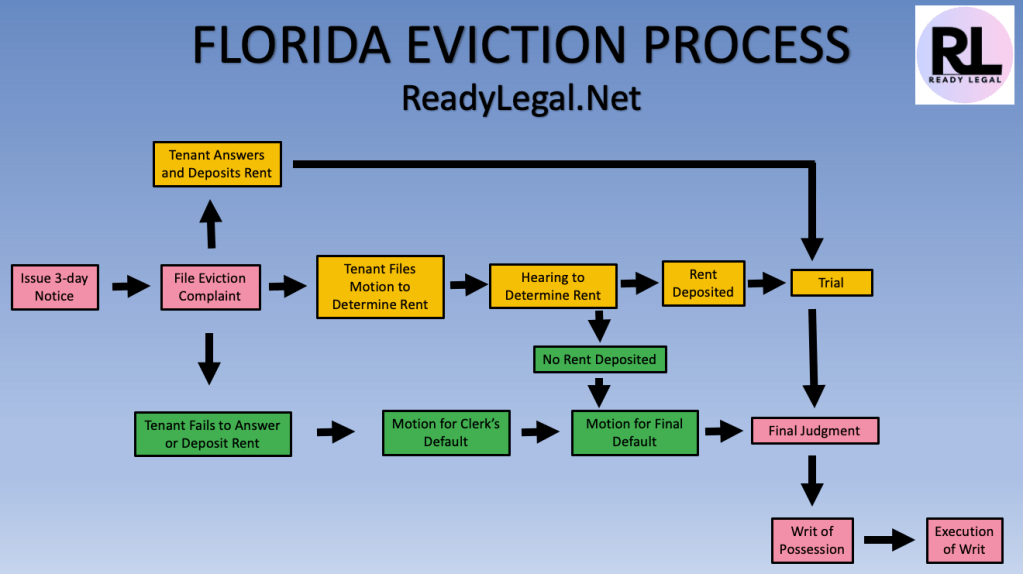
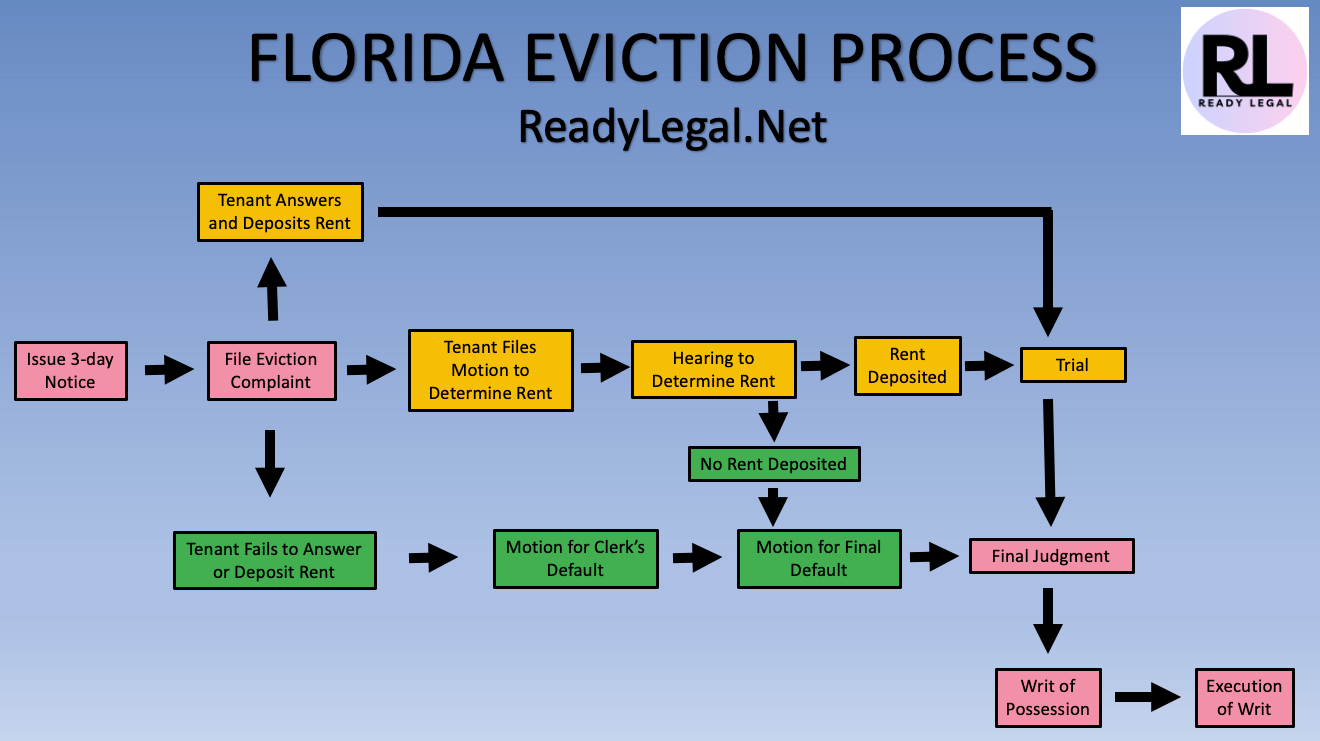
Filing an eviction in Florida can be a difficult and time consuming process that no landlord likes to deal with. However, some evictions are more difficult and take more time than others. Evictions can generally follow one of three routes depending on how the tenant responds to the complaint. In this blog post, we’ll discuss the three main routes that a Florida eviction can follow.

Start of Proceedings

In all cases involving non-payment of rent, the landlord is required to issue a three-day notice, informing the tenant that they have three days to either pay rent, or surrender possession of the property. If the tenant fails to comply with this notice, the landlord must then file a complaint in court for eviction. The complaint and summons must then be served on the tenant at the property.

Route 1: Uncontested Eviction

If the tenant fails to respond to the complaint or deposit rent (absent a motion to determine rent) within five business days, the eviction is essentially uncontested. In this scenario, the landlord’s first step is to file a motion for clerk’s default and affidavits regarding the tenant’s non-military status. If filed properly, the clerk will enter a “clerk’s default” against the tenant.

The clerk’s default is the first step in obtaining a final default judgment. After the clerk enters a default, the landlord must apply with court, via motion for final default judgment, requesting the court enter final judgment. If done correctly, the court will enter a final default judgment, and direct the clerk to issue a writ of possession to the sheriff’s office.

A flowchart outlining the process for evictions in Florida

Route 2: Contested Eviction

If the tenant files an answer to the complaint and deposits the rent in dispute in the court’s registry, the tenant has essentially contested the eviction, and the case must proceed to trial. At trial, the landlord will be required to present a case showing that the tenant failed to properly pay rent, in breach of the lease, and that these grounds warrant termination of the lease and eviction.

If the landlord is successful, the court will enter final judgment following trial, and direct the clerk to issue a writ of possession. Additionally, the court may order the delinquent rent held in the court’s registry to be disbursed to the landlord on a complaint for money damages.

Route 3: Dispute as to Rent

Under Florida law, tenants may also respond to the lawsuit by filing a motion to determine rent. In this scenario, the tenant effectively asks the court to decide how much rent is purportedly owed and must be deposited in the court registry for the case to proceed to trial.

If the tenant files a motion to determine rent, the court will hold an evidentiary hearing to determine the rent the tenant must deposit. After the hearing, the court will order the tenant to deposit rent. Additionally, if the tenant has not responded to the complaint, the court may direct the tenant to file an answer to the complaint. If the tenant complies with this order, the case will proceed to trial, where the landlord can obtain a final judgment and writ of possession.

Final Process

In each scenario, the landlord must obtain a final judgment and writ of possession. However, this is not the end of the road. The landlord must next present the writ to the county sheriff’s office, along with a fee, for the sheriff to execute on the writ of possession. During execution, the sheriff will provide the tenant with 24 hours notice to vacate the property, and then return the next day to physically remove the tenant, if necessary. The landlord is typically required to meet the sheriff and may change the locks at this time.

DISCLAIMER: The information provided on this website does not, and is not intended to, constitute legal advice; instead, all information, content, and materials available on this site are for general informational purposes only.