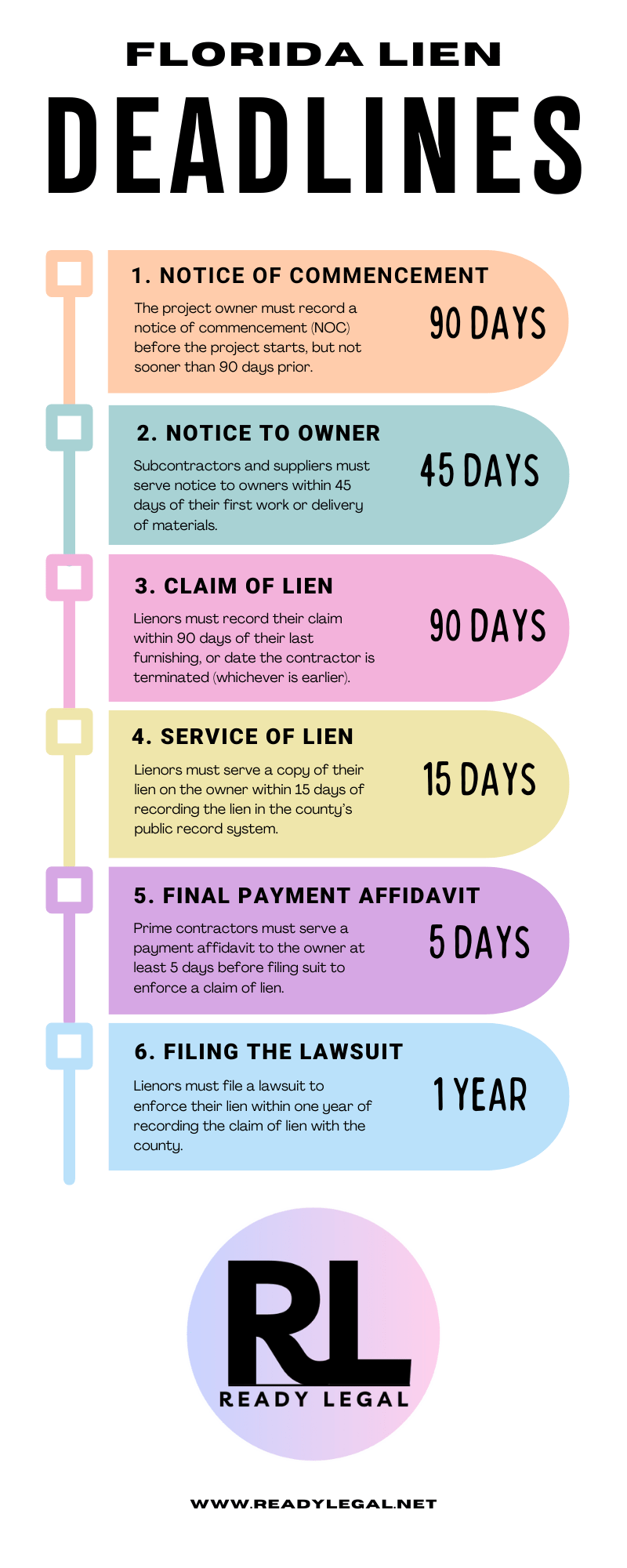
Florida’s construction industry is governed by a comprehensive set of laws. Chapter 713 plays a crucial role in outlining the procedures and deadlines related to construction liens. Understanding these deadlines is essential for all parties involved in a construction project to ensure timely payment. In this blog post, we’ll delve into six important deadlines under Florida’s Construction Lien Law:
- Notice of Commencement (90 days):
Before embarking on a construction project, it is imperative for property owners and contractors to be aware of the first deadline – the recording of a Notice of Commencement. This notice must be recorded before the project starts, but not sooner than 90 days prior. Failing to adhere to this deadline may result in complications later in the project. The Notice of Commencement serves as a formal declaration, providing crucial information about the project, such as the property description, owner’s information, and the general contractor.
- Notice to Owner (45 days):
Once work begins on the project, parties who are not in a direct contract with the owner have up to 45 days from the commencement of their work or delivery of materials to serve a Notice to Owner. This notice is a proactive step that helps secure the lienor’s rights by formally informing the property owner about their involvement in the project. Missing this deadline can limit a contractor’s ability to file a valid lien later on, underscoring the importance of timely serving an NTO.
- Claim of Lien (90 days):
The third critical deadline involves the recording of a Claim of Lien. This must be done within 90 days from the earlier of: (a) the claimant’s last date of work, or (b) termination of the contractor under whom the lienor is working. The Claim of Lien is a legal document that outlines the amount owed for services or materials provided. It serves as a formal claim against the property and should be recorded within the specified timeframe to maintain its validity.
- Service of Claim of Lien (15 days):
Recording a Claim of Lien is not the final step; serving a copy of the claim on the property owner is equally important. Lienors are required to serve a copy of the Claim of Lien on the owner within 15 days of recording the lien. This step ensures transparency and provides the property owner with notice of the outstanding debt. Failure to meet this deadline can impact the lienor’s ability to enforce the lien effectively.
- Contractor’s Final Payment Affidavit (5 days):
As the project nears completion, the direct contractor must be mindful of the deadline to provide the owner with a Contractor’s Final Payment Affidavit. This document, which attests to all payments made to subcontractors and suppliers, must also be given to the owner at least 5 days before filing a suit to enforce a lien. Timely issuing a CFPA ensures that the owner cannot move to dismiss the lawsuit for the contractor’s failure to comply with the statute.
- Deadline to File Suit to Enforce the Lien:
The final and perhaps most critical deadline is the requirement to file a suit to enforce the lien within one year of recording the lien. Missing this deadline can result in the loss of the lienor’s right to pursue legal action to foreclose on the lien. Contractors and subcontractors must be vigilant in tracking this timeframe to protect their interests effectively.
Closing:
Navigating the intricacies of Florida’s Construction Lien Law is essential for all stakeholders involved in construction projects. By understanding and adhering to these six crucial deadlines, property owners, contractors, and subcontractors can mitigate risks, maintain transparency, and ensure a fair resolution of payment disputes.
Click HERE to download or share a copy of our graphic.
DISCLAIMER: The information provided on this website does not, and is not intended to, constitute legal advice; instead, all information, content, and materials available on this site are for general informational purposes only.
 READY LEGAL