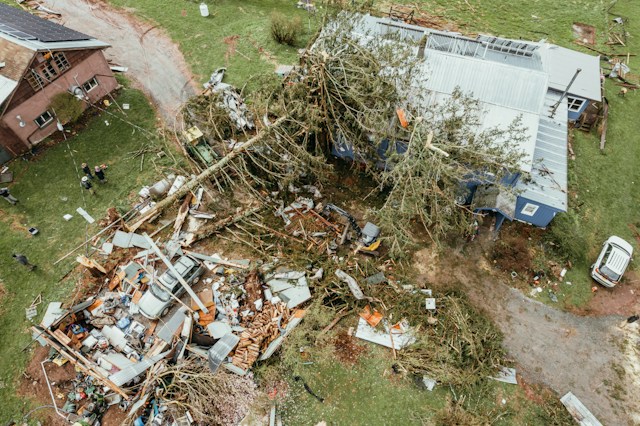
The journey to homeownership is filled with potential twists and turns, and one such consideration is how to handle property damage when a property is under contract but not yet sold. In the realm of Florida real estate, the FARBAR contract provides a framework for addressing property damage occurring after the contract is entered but prior to closing. Let’s explore the rights of the parties in the event of a “Casualty Loss,” as defined by the FARBAR contract:
Understanding the FARBAR Contract Provision:
In the event of property damage due to fire or another casualty, the FARBAR contract delineates the rights and responsibilities of both parties. If the cost of restoration doesn’t exceed 1.5% of the Purchase Price, it becomes the seller’s obligation, and the closing proceeds according to the terms of the contract.
If restoration isn’t completed by the closing date, 125% of the estimated cost to complete restoration (not exceeding 1.5% of the Purchase Price) is “held back” in escrow for the buyer at closing. If the actual cost to complete the repairs then surpasses the escrowed amount, the seller is responsible for covering the difference (up to 1.5% of the Purchase Price). Any unused portion of the escrowed amount is returned to the seller.
However, if the cost of restoration exceeds 1.5% of the Purchase Price, the buyer has the option to either accept the property “as is” along with the 1.5%, or they can choose to receive a refund of the deposit, releasing both parties from further obligations under the contract.
As one caveat — the FARBAR contract states that the seller’s sole obligation regarding tree damage is limited to the cost of pruning or removal.
Breaking Down the Contract Provision:
Consider a scenario where a property, under contract for purchase, suffers damage from a sudden fire. If the cost of restoration is within the 1.5% threshold, the seller is responsible for covering the expenses, and the closing can proceed. If, however, the restoration extends beyond the closing date, an escrowed amount is set aside.
Now, let’s explore the scenario where the cost of restoration exceeds 1.5% of the Purchase Price. In such cases, the buyer gains additional options. They can choose to accept the property “as is” with the 1.5% contribution from the seller, or they may decide to receive a refund of the deposit, effectively releasing both parties from further obligations under the contract.
Final Thoughts
In the event of property damage while a Home is in the process of being sold, it is important for buyers and sellers to understand their respective rights so they can take the best action possible. In the event of disagreements, such as over the total price of damage, it may be advantageous to consult with an attorney.
DISCLAIMER: The information provided on this website does not, and is not intended to, constitute legal advice; instead, all information, content, and materials available on this site are for general informational purposes only.
 READY LEGAL