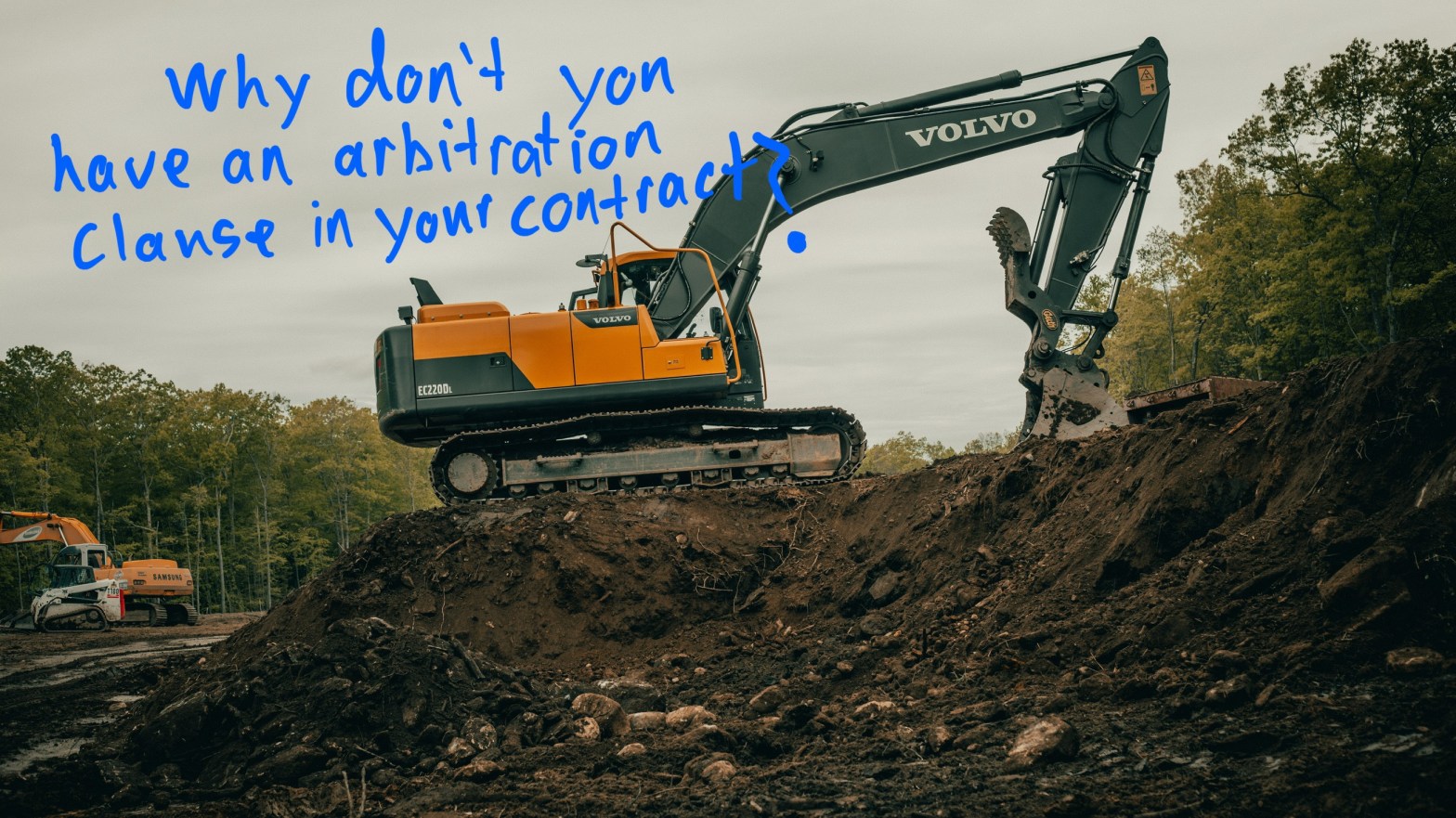
In the complex realm of construction projects, conflicts and disputes can be a major stumbling block that hampers progress, strains relationships, and drains financial resources. To overcome these challenges when they arise, contractors and suppliers should seriously consider incorporating an arbitration clause in their contracts. This article explores just a few of the advantages of using an arbitration clause, highlighting how these clauses can yield better results than traditional litigation:
- Swift and Streamlined Resolutions:
Arbitration provides a faster and more streamlined alternative to the often lengthy and cumbersome traditional litigation. By including an arbitration clause, you ensure that any disputes that may arise during the construction project will be resolved through arbitration, allowing for streamlined resolutions. This saves valuable time and resources that would otherwise be tied up in protracted court battles. - Industry Expertise and Impartiality:
Arbitration empowers parties to choose arbitrators who have specialized knowledge and expertise in the construction field. These arbitrators understand the intricacies of the industry in a way that comes with experience. In contrast, litigation places the decision-making power in the hands of judges, who are generalists, and may not possess familiarity with the industry. By having construction experts as arbitrators, you can expect better decisions and outcomes tailored to the unique demands of construction projects. - Confidentiality and Privacy:
Arbitration offers a higher level of confidentiality and privacy compared to public court proceedings, where virtually everything is available online in Florida. By including an arbitration clause, you can safeguard sensitive business information, trade secrets, and proprietary processes from the public court records. This is particularly vital in the competitive construction industry, where confidential information can aid competitors and customers in negotiations. - Cost-Effectiveness:
Litigation can be a financial burden, involving substantial legal fees, court costs, and potential damages. Because it is quicker and more streamlined, arbitration is generally more cost-effective. The process allows for an expedited resolution which minimizes legal expenses, resulting in significant cost savings for contractors and suppliers. Furthermore, arbitration often eliminates the need for extensive document production and discovery, reducing overall expenses even further. - Flexibility and Customization:
Arbitration allows parties to tailor the process and procedures to their specific needs, providing greater flexibility compared to court litigation. Contractors and suppliers can select the most suitable rules, determine the arbitration location, and set a timeline for resolution. This flexibility enables parties to expedite decision-making, resolve disputes more efficiently, and maintain healthier working relationships.
For construction contractors and suppliers in Florida, incorporating an arbitration clause in their construction contracts brings numerous advantages. By negotiating for this advantage at the outset of the project, contractors and suppliers can navigate potential disputes more efficiently, ensuring a smoother and less expensive resolution.
DISCLAIMER: The information provided on this website does not, and is not intended to, constitute legal advice; instead, all information, content, and materials available on this site are for general informational purposes only.
 READY LEGAL